.webp)




.svg)

.avif)
Key Takeaways (TL;DR)
The best AI note taker for sales isn't the one with the nicest recap. It's the one that fixes what your team keeps dropping after calls: CRM updates, deal context, and the conversations that happen off Zoom.
- EchoIQ (MaxIQ): connects calls to deals, pipeline, and forecast
- Gong: enterprise coaching at enterprise cost
- Granola: clean botless notes for individual reps
- Fireflies / Otter: broadest capture, including in-person
- Chorus: best inside the ZoomInfo ecosystem
- Avoma: mid-market sweet spot
- Grain: shareable clips, HubSpot-friendly
- tl;dv: the budget starting poin
The best AI note taker is the one that fixes what your team keeps dropping after calls. For most sales teams that's CRM updates and deal context, and that's how we've ranked all 9 tools below.
Every sales call has two versions: the transcript, and the version the rep actually remembers. The buyer hesitating on pricing. The champion going vague when legal came up. That second version is the one that decides deals, and it's the one that disappears first, because reps spend 60% of their week on non-selling work and post-call admin is the first thing that gets rushed.
AI note takers exist to catch what reps can't write down while selling. But the bar moved in 2026. A summary in your inbox isn't the product anymore. The tools worth paying for fill CRM fields on their own, capture the trade show conversation and the client site visit, not just the scheduled Zoom, and show a manager why a deal is stuck without a second call. Teams that need coaching, deal inspection, and forecasting on top of meeting notes should compare broader conversation intelligence software
This guide compares 9 tools on exactly that standard.
Table of Content:
- The 9 tools at a glance
- What is an AI note taker?
- Why sales teams need AI notetakers for sales calls
- 9 best AI note takers for sales teams
- What about in-person sales calls, field visits, and trade shows?
- How AI note takers fill CRM fields
- How to choose the right AI note taker for sales?
- Key features to look for in an AI notetaker in 2026
- CRM and sales stack integrations
- AI Note Taker Pricing and Plans
- Turn every sales call into revenue intelligence
The 9 tools at a glance
Here’s how they compare on the factors that matter most to sales teams: CRM automation, in-person and mobile capture, and pricing. You’ll find a closer look at each tool below.
What is an AI note taker?
An AI note taker is the thing that stops your sales call from turning into a half-remembered CRM update.
It listens to the conversation, whether that happens on Zoom, over the phone, or across a table, and turns it into a transcript, a summary, and the updates your CRM has been waiting for. The good ones go further and fill the actual fields: next step, stage, contacts, blockers.
But if you've ever looked at a rep's post-call notes, you know the transcript is not the hard part.
The hard part is catching the bit that mattered. The buyer said procurement would "probably be fine," but didn't sound very sure. The VP asked about implementation twice. The champion promised to send over security requirements, then nobody wrote that down. Someone mentioned a competitor, but it didn't feel important until the deal slowed down two weeks later.
That is where AI note takers earn their place.
They let reps stay in the conversation instead of typing through it. They also give the rest of the team a cleaner trail to follow after the call. What was agreed? What still feels shaky? What needs to go into the CRM before everyone forgets the details? What should the manager know before the next forecast review?
That is the real job.
Not just "record, transcribe, summarize." Those are table stakes now. For sales teams, the question is whether the tool helps you keep the deal honest after the call is over.
{{startup-banner}}
Why sales teams need AI notetakers for sales calls
When reps take notes manually, they split attention between listening and writing. That divided focus means missed buying signals, incomplete context, and deals that stall because someone forgot a critical detail.
The downstream effects add up fast. CRM data decays when reps skip updates after calls. Handoffs between AEs, SEs, and CS lack the context needed to maintain momentum. Managers coach reactively because they only hear about calls secondhand. And nobody even pretends to write notes after a trade show. Those conversations just disappear.
- Manual note-taking splits attention: Reps miss buyer signals while writing
- CRM updates get skipped: Reps deprioritize admin work after calls
- Deal context disappears: Handoffs between AEs, SEs, and CS lack detail
- Coaching stays reactive: Managers only hear about calls secondhand
- In-person meetings leave no trail: Nobody writes up the booth chat or the site visit. Those deals run on memory.
An AI notetaker takes all of this off the rep's plate. The rep talks. The tool captures, summarizes, and pushes it to the CRM. That's it.
9 Best AI Note Takers for Sales Teams
Here's a closer look at each tool.
1. EchoIQ by MaxIQ
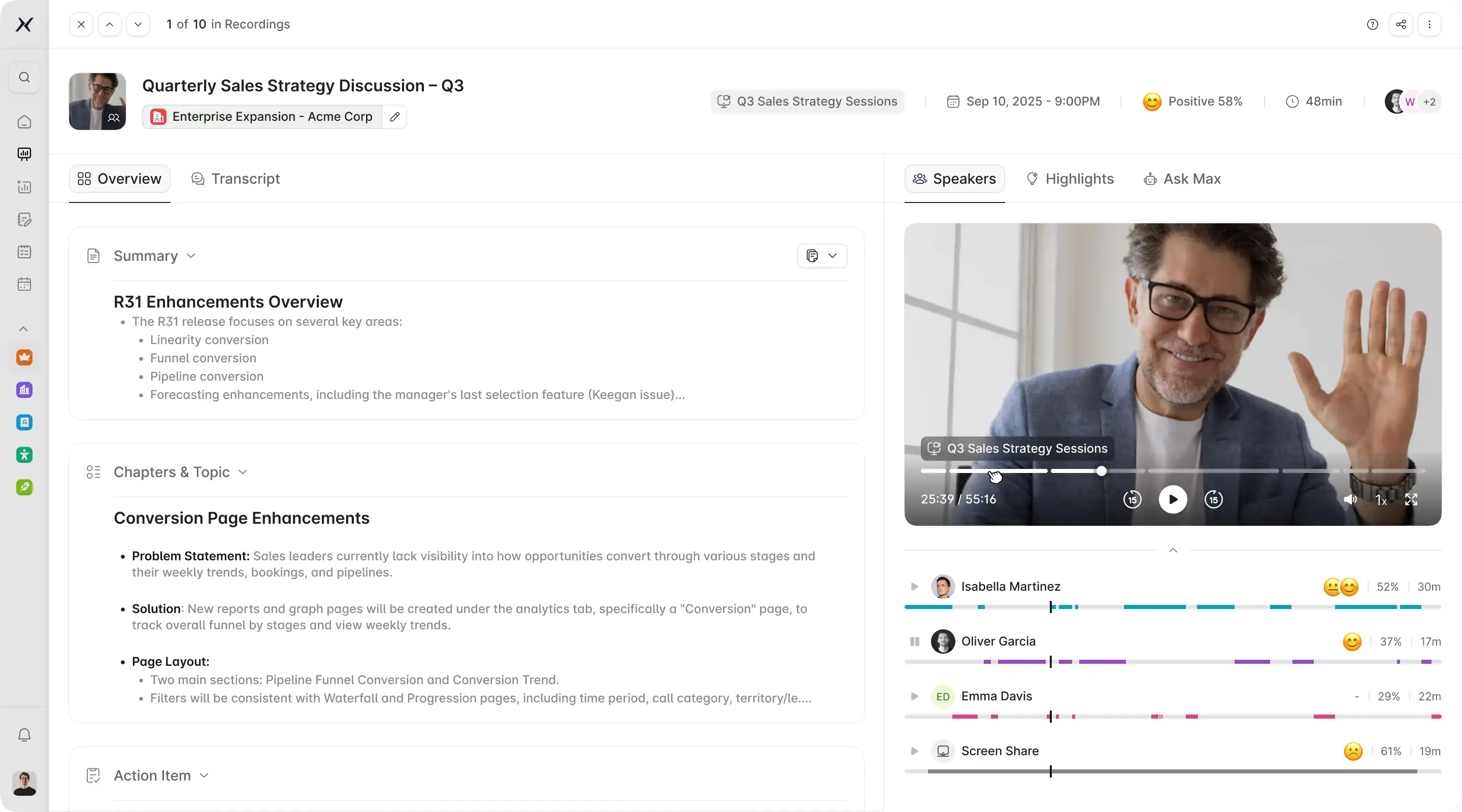
EchoIQ is built for the entire revenue journey, not just call recording. It auto-captures calls and summaries, surfaces risks and blockers, and syncs insights directly to deals and forecasts.
What sets it apart is the connection between conversation data and pipeline health. When a customer mentions pricing concerns, EchoIQ sees that the contract renews in 45 days and usage dropped last month. That context changes what the insight means and what action to take next, particularly for forecast accuracy and pipeline health.
The platform supports pre-meeting briefings with full account context, real-time capture during calls, and automated post-meeting recaps with CRM updates and follow-up tasks. Sales, CS, and RevOps teams share the same conversation-driven context, which eliminates the handoff gaps that typically slow deals.
2. Gong
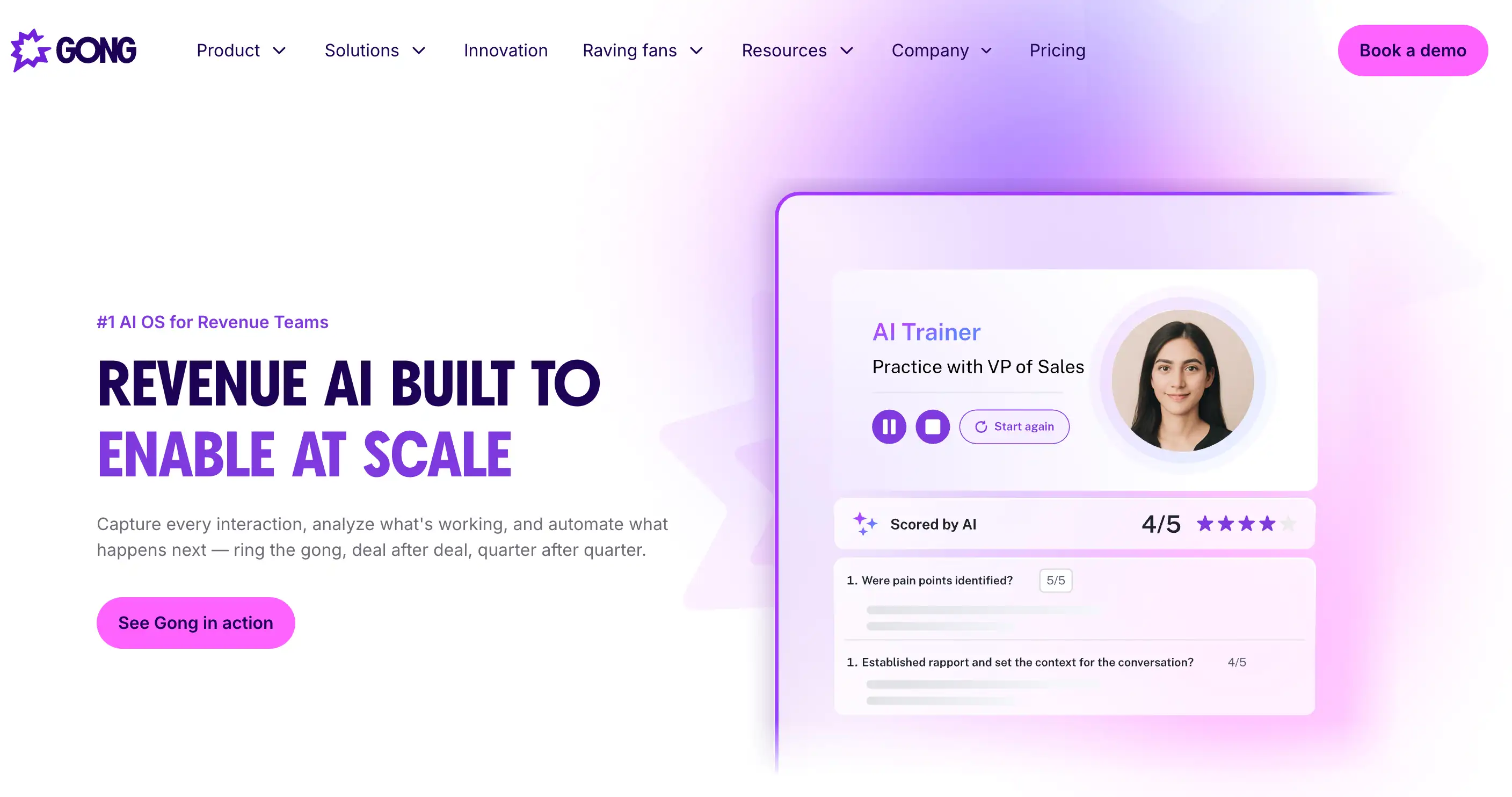
Gong is an enterprise-grade conversation intelligence platform with deep analytics and extensive call libraries. Large sales organizations use it for competitive insights, deal tracking, and coaching at scale. The platform excels at pattern recognition across thousands of calls.
Gong uses custom pricing, with per-user licences and a platform fee based on the number of users. That can make it a heavier purchase for smaller teams that mainly need recording, summaries, and CRM updates.
3. Granola
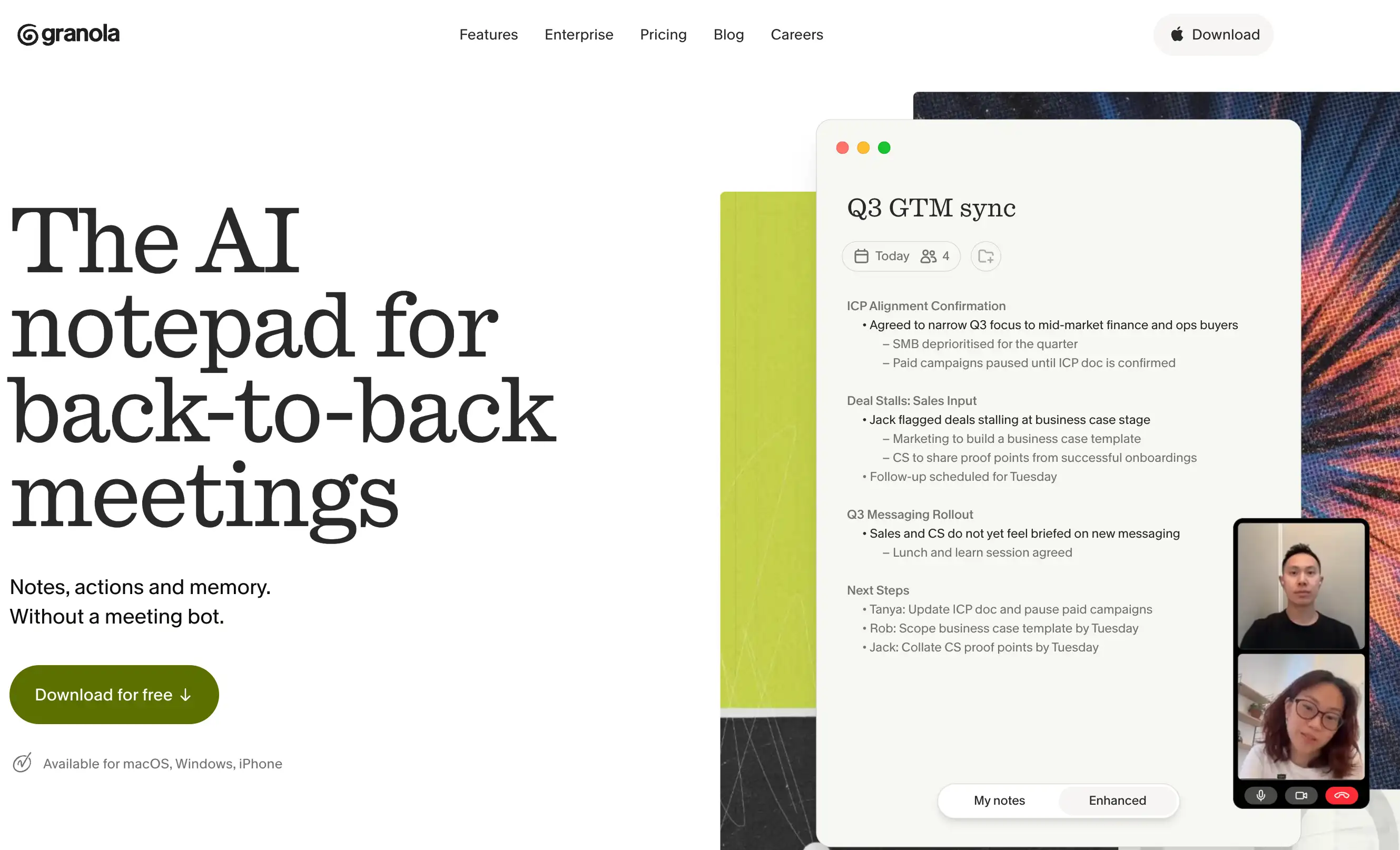
Granola is a good fit for reps who want clean notes without a meeting bot joining the call.
It captures the conversation from your device, turns rough notes into sharper summaries, and makes follow-ups easier after back-to-back sales calls. The trade-off is that it feels more like a personal AI notepad than a full sales intelligence platform. Great for individual productivity, lighter for CRM automation, coaching, and forecast context.
Granola connects natively with HubSpot, but Salesforce workflows require Zapier. That makes it less suitable for Salesforce teams that need automatic field updates without additional setup.
4. Fireflies.ai
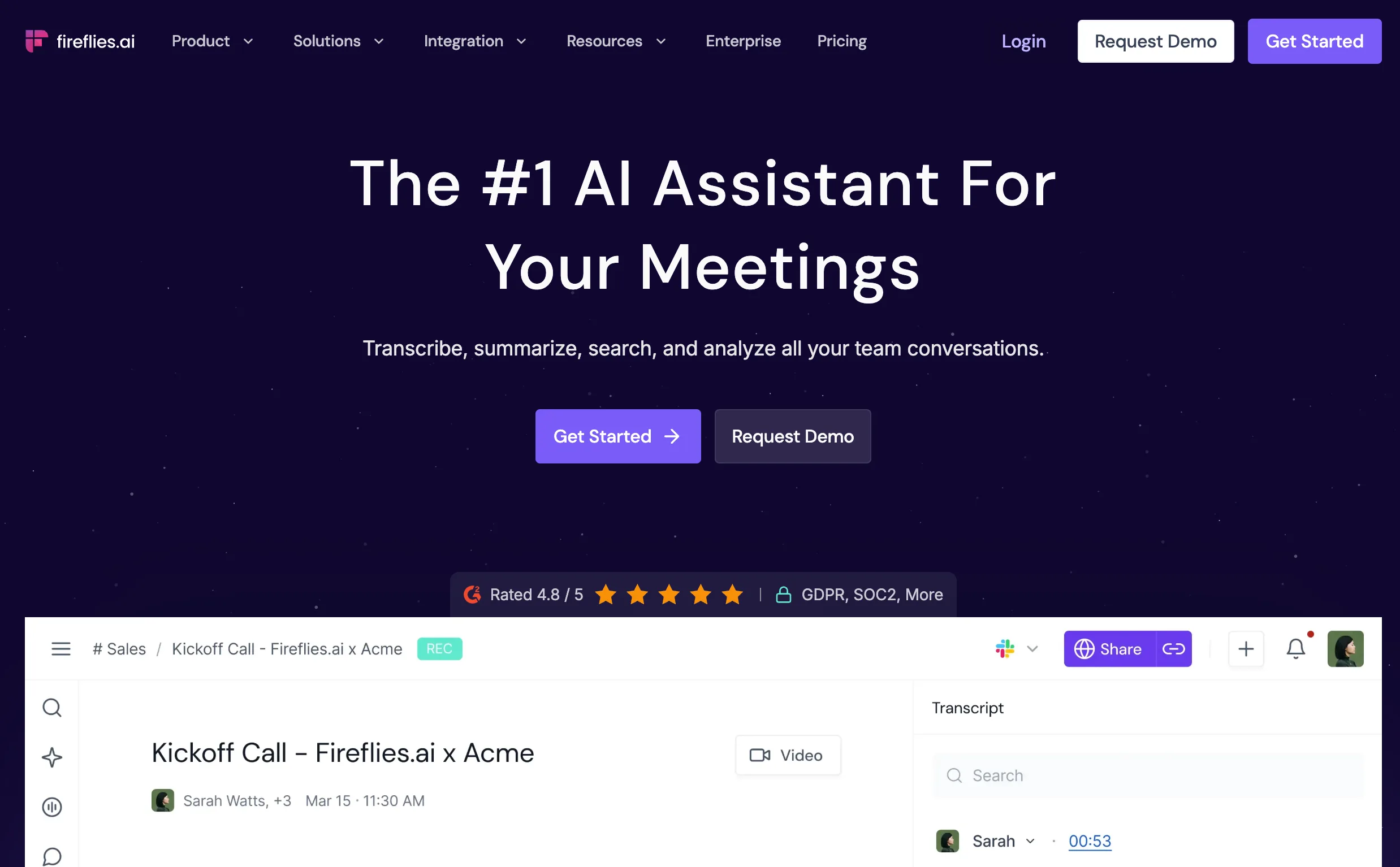
Fireflies captures meetings through a bot, Chrome extension, desktop app, and mobile app, with integrations across more than 100 tools. Its mobile app can also record in-person conversations, while AskFred lets users search and ask questions across their meeting history.
Its flexible capture options make Fireflies useful for teams beyond sales, although its pipeline and forecasting capabilities are lighter than those of full revenue intelligence platforms.
5. Otter.ai
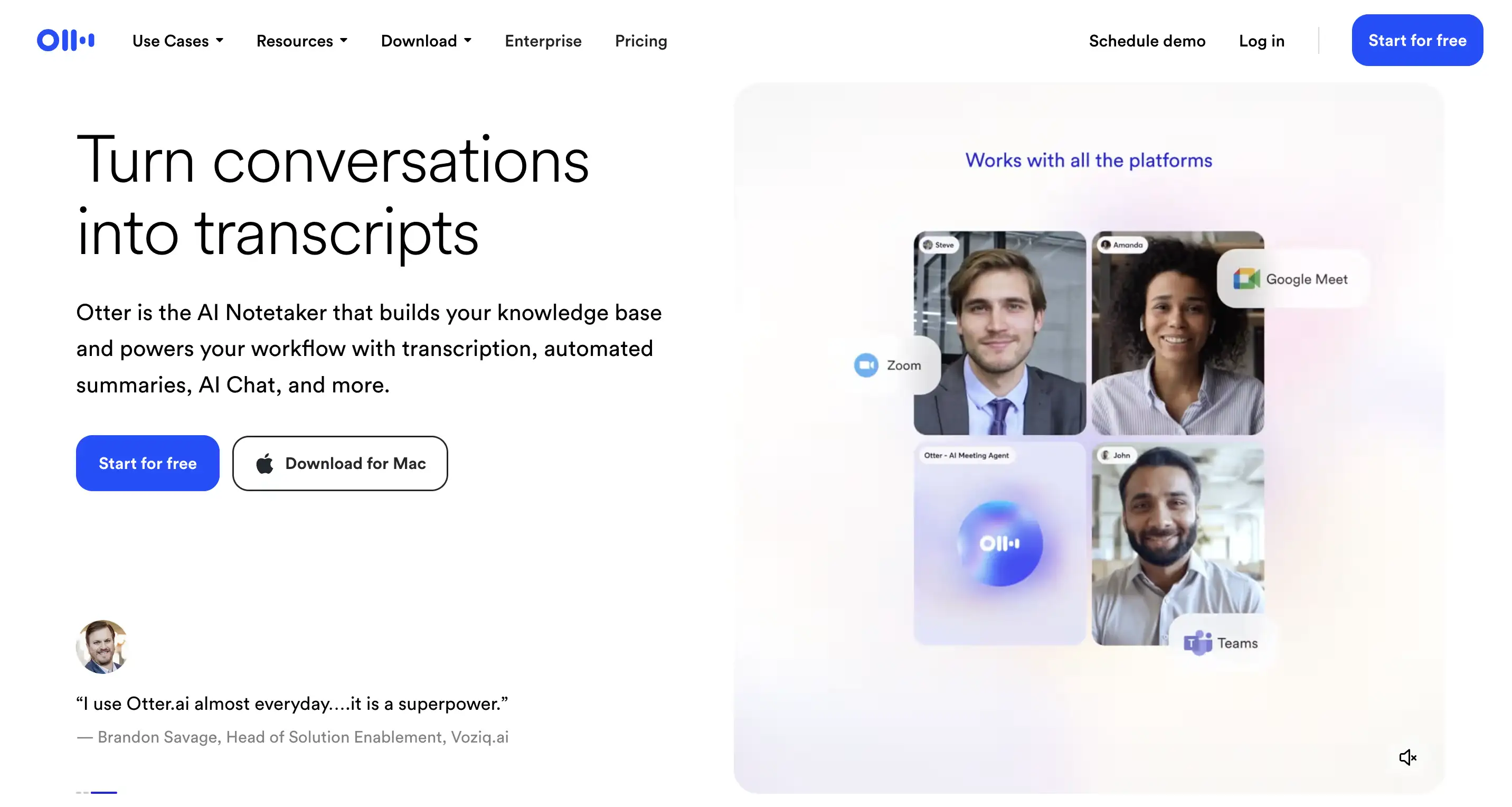
Otter is a general-purpose AI meeting assistant with strong live transcription and a familiar interface. It works well for virtual meetings, internal conversations, and in-person recording.
Otter connects with Salesforce and HubSpot, and supported plans can map meeting insights such as next steps, pain points, action items, and summaries into CRM fields. It remains better suited to transcription-led workflows than teams looking for deeper deal inspection, forecasting, or sales coaching.
6. Chorus by ZoomInfo
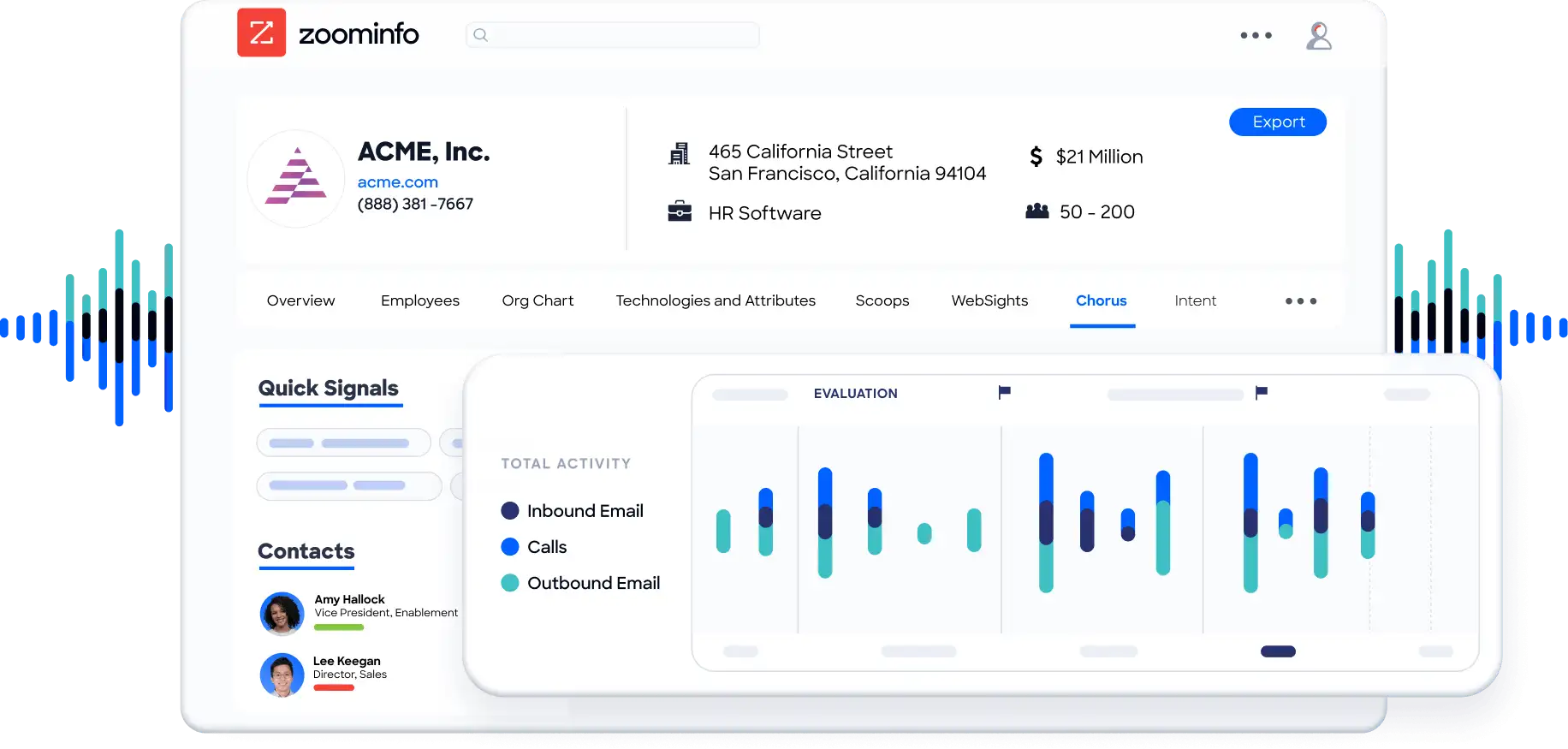
Chorus integrates tightly with ZoomInfo's data platform, making it a natural fit for teams already in that ecosystem. The conversation intelligence capabilities are solid, with good coaching and deal tracking features.
Chorus is strongest for teams already using ZoomInfo. Teams outside that ecosystem should compare whether they need the wider ZoomInfo data stack or only conversation intelligence and note-taking.
7. Avoma
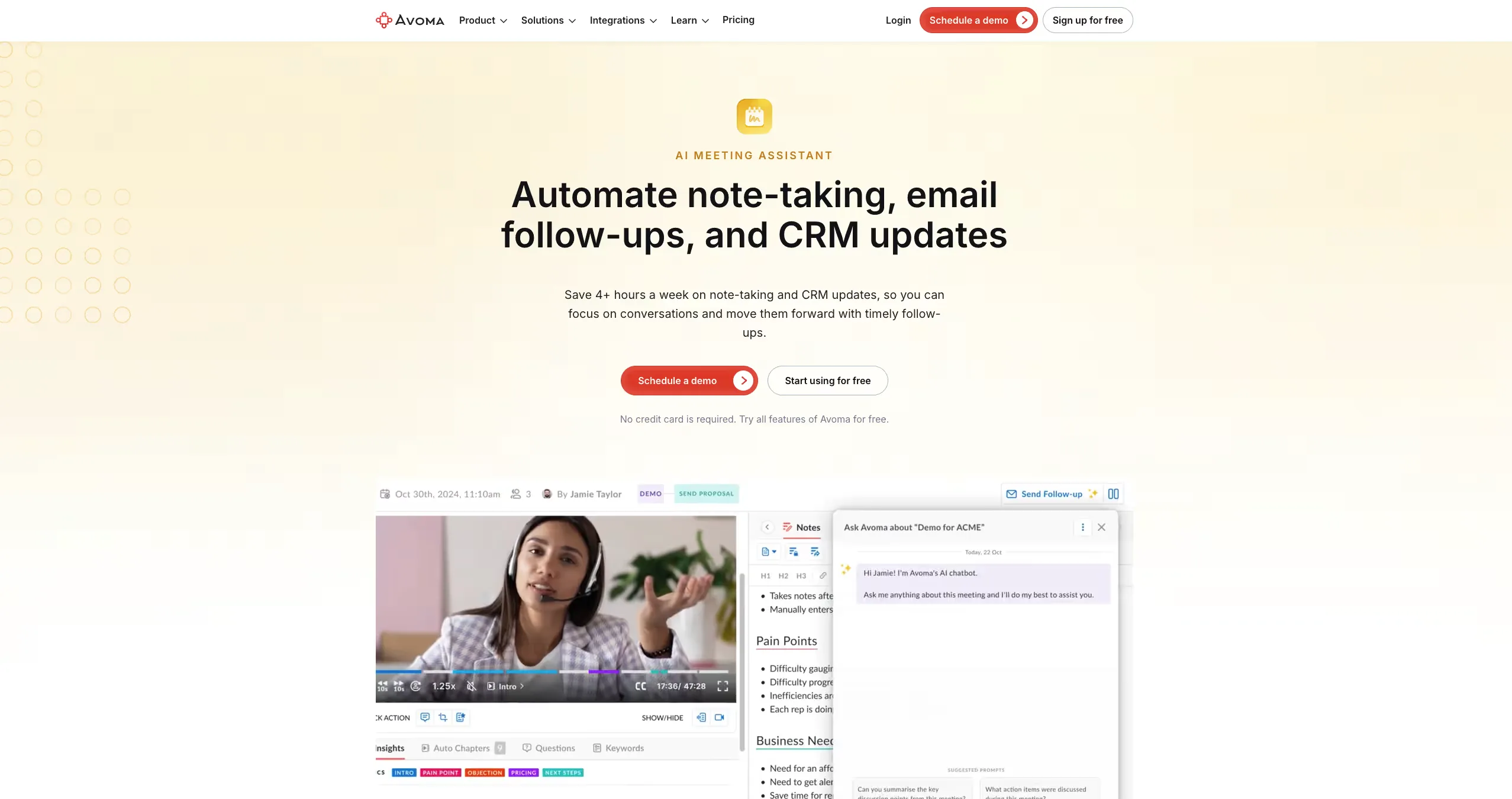
Avoma covers the full meeting lifecycle from scheduling through follow-up. It balances note-taking with light conversation intelligence, hitting a sweet spot for mid-market teams.
8. Grain
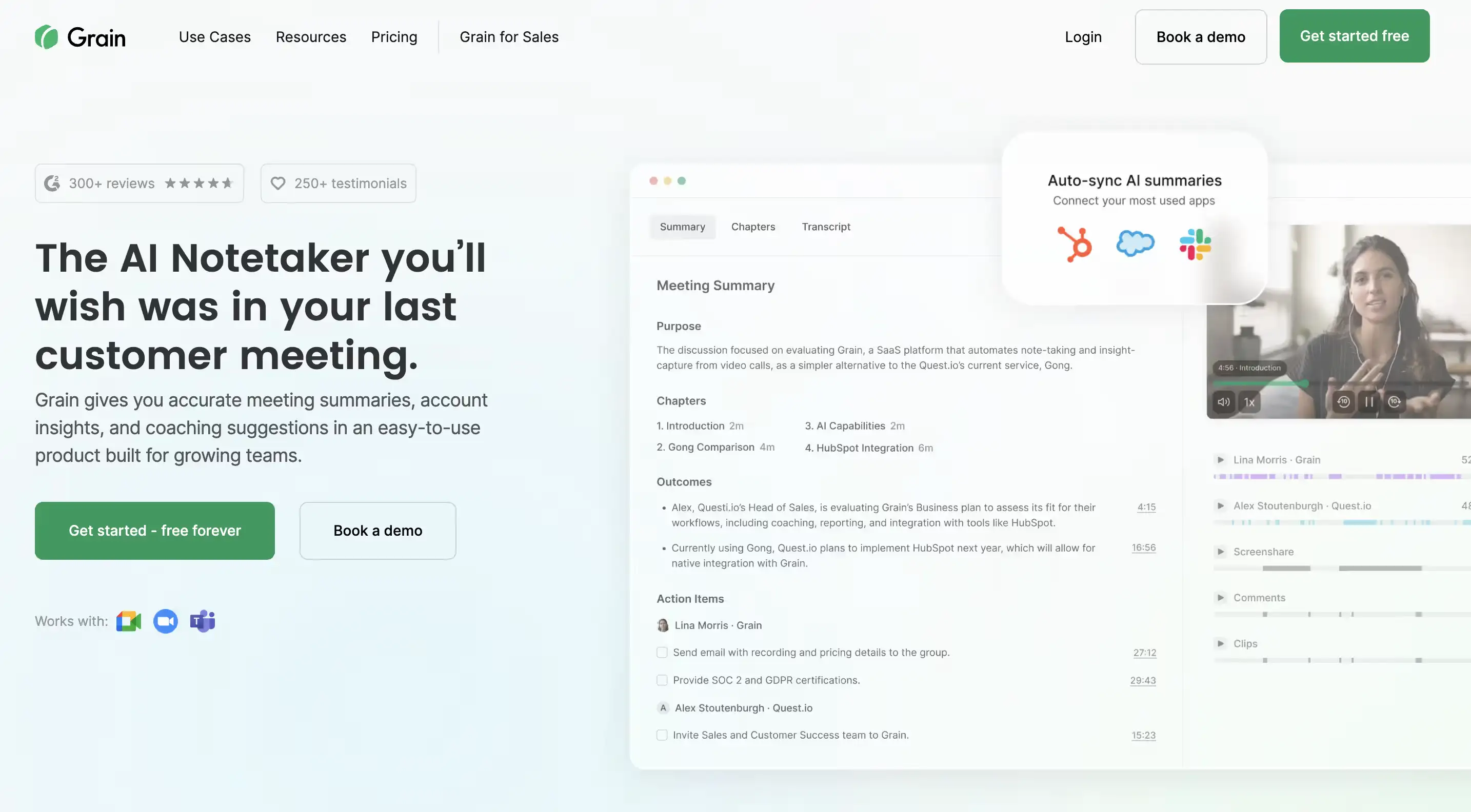
Grain focuses on shareable call clips and async collaboration. Teams can send important moments through Slack, email, or their CRM without asking everyone to watch the full recording.
Its Salesforce and HubSpot integrations support field mapping, tasks, custom properties, and activity syncing. Grain’s limitation is not basic CRM automation. It does not go as deep into forecasting and pipeline inspection as a broader revenue intelligence platform.
9. tl;dv
tl;dv is a budget-friendly option with solid transcription and summaries. Startups and SMBs watching costs often start here. The trade-off is lighter analytics and forecasting integration.
What about in-person sales calls, field visits, and trade shows?
Most AI notetakers were built for one situation: a scheduled meeting on Zoom, Meet, or Teams, with a bot sitting in the participant list. That covers inside sales. It does nothing for the rep who just spent twenty minutes with a prospect at a booth, drove two hours for a site visit, or closed half the deal over lunch.
Those are usually the most important conversations a field team has. They're also the least documented, because the rep's next stop is their car, not their laptop.
Three ways to capture them:
A mobile app. Fireflies and Otter can both record from a phone, transcribe the conversation, and drop the notes into the same workspace as your virtual calls. Simplest option, since reps already carry the device.
Botless capture. Granola listens through the device's microphone instead of joining as a bot. Built for virtual calls, but the same trick works when everyone's in one room with a laptop open.
A recording device. Plaud is the best-known here: the Note Pro sits on the table or handles phone calls, the wearable NotePin captures conversations hands-free at events. Audio stores locally and syncs later, which matters at a multi-day conference with bad wifi. The catch is the last mile. Plaud has no native Salesforce or HubSpot sync, so getting a summary onto a deal record means building a Zapier automation or copying it over yourself. Great capture, manual handoff. Budget for that before buying devices for a whole team.
Whichever route you pick, two things will decide whether it works.
The first is consent. Recording someone without telling them ranges from rude to illegal depending on where you're standing. The fix costs one sentence: "I've got notes running so I can actually pay attention." Most buyers take it well. Some appreciate it.
The second is where the notes land, and this is where field capture usually falls apart. A transcript trapped in a recording app is barely better than no notes at all. The test: does the booth conversation end up next to your Zoom calls, in the CRM, with the same summary, the same follow-up tasks, and the same connection to the deal? Capture is the easy half. The value shows up when the conversation reaches your pipeline, which is exactly the job tools like EchoIQ are built for.
If your team splits time between virtual and in-person selling, weigh this heavily. Look back at the comparison table: only some of the 9 tools capture anything outside a scheduled video meeting. For a field-heavy team, that column matters more than any other.
How AI note takers fill CRM fields
Every tool on this list claims a CRM integration. The claims hide three very different realities.
Level one: the attachment. A summary and transcript link get dropped onto the record. Technically integrated. Practically, your CRM is now a filing cabinet with better handwriting.
Level two: notes and tasks. The summary logs to the right record, participants match to contacts, action items become CRM tasks. Some tools stop at logging notes and tasks. Others go further. Otter and Grain can map extracted meeting insights into CRM fields on supported plans, while Granola uses Zapier for Salesforce workflows. The important question is not whether a CRM integration exists, but what information it can write and which plan includes it.
Level three: the fields themselves. The tool listens for what your pipeline runs on and writes it to the fields: next step, stage, budget, blockers, competitor mentions. Level two documents the meeting. Level three updates the deal.
Under the hood it's the same everywhere: transcribe the call, extract the facts, map them to fields, sync. What separates tools is extraction quality, whether you can map to your custom fields, and whether the rep reviews the update before it lands. That review matters: a wrong close date written confidently into Salesforce is worse than an empty one.
Two buying notes. Field-level automation usually sits on business or enterprise tiers, so check which plan actually includes it. And filling the field is only step one. When a buyer asks about implementation twice in one call and the deal's been sitting in stage three for six weeks, that's not two data points, it's a stalled deal telling you why. Connecting those dots is what EchoIQ is built for.
How to choose the right AI note taker for sales?
Picking the right sales notetaker depends on your sales motion, existing tech stack, and growth trajectory. Features alone don't determine fit.
Match features to your sales motion
High-velocity inside sales teams prioritize fast CRM sync and quick summaries. Enterprise field sales may care more about coaching insights and deal intelligence. A tool that's perfect for one motion can feel clunky for another.
Evaluate integration depth
Not all integrations are equal. Some tools offer native, bidirectional sync that pushes the right data to the right CRM fields automatically. Others require middleware or manual configuration that adds friction and maintenance overhead.
Consider total cost of ownership
Sticker price doesn't capture the full picture. Factor in implementation time, training, and ongoing administration. A tool that costs less per seat but takes three months to deploy may cost more than a pricier option that's live in days.
Key features to look for in an AI notetaker in 2026
The feature gap between basic transcription tools and full conversation intelligence platforms is significant. Here's what separates the two.
Transcription accuracy and language support
Accuracy matters for searchability and trust. If transcripts are riddled with errors, reps won't use them. Multi-language support matters for global teams, and speaker identification called speaker diarization ensures you know who said what.
AI summaries and action items
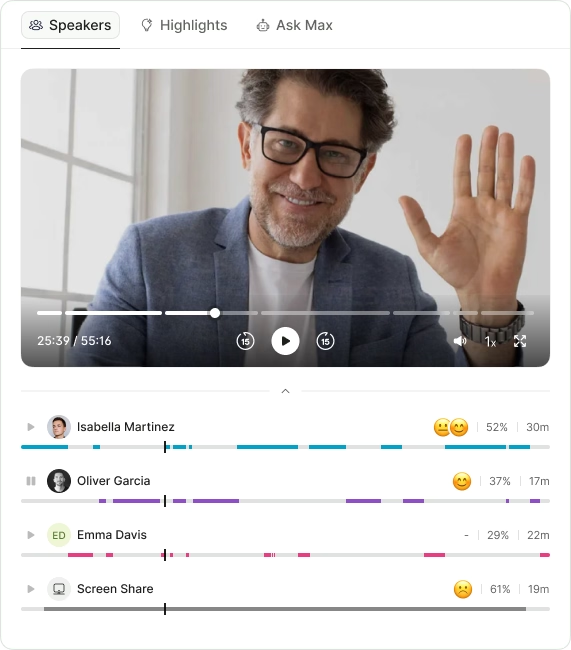
AI-generated summaries distill 45-minute calls into key takeaways, next steps, and blockers. Reps and managers can review in seconds instead of re-watching recordings or scrolling through transcripts.
Conversation intelligence and coaching insights
Conversation intelligence analyzes talk patterns, topics, objections, and sentiment. Managers use scorecards and coaching cues to improve rep performance based on actual call data and deal inspection insights rather than self-reported summaries.
Multi-platform meeting capture
Sales conversations happen on Zoom, Teams, Meet, phone dialers, and increasingly in person. A tool that only captures one channel misses context. If your team sells in the field, see the in-person capture section above, that's the channel most tools skip.
Searchable conversation history
Teams can search across all recorded calls by keyword, topic, or competitor mention. This is useful for deal reviews, competitive intel, and onboarding new reps who want to learn from past conversations.
CRM and sales stack integrations
An AI note taker only delivers value if it connects to your existing workflows. Integration depth varies significantly across tools.
Salesforce and HubSpot integration
Two-way sync pushes call summaries, action items, and engagement data to opportunity and contact records. Field mapping and automation triggers let you customize what data flows where.
Zoom, Teams, and Google Meet compatibility
Notetakers typically join meetings via calendar integration or bot invite. Recording permissions and participant notifications vary by platform, so check compliance requirements for your region.
Slack and collaboration tools
Real-time notifications for call completions, deal mentions, or risk alerts keep teams aligned without leaving their communication hub. Some tools push full summaries to channels automatically.
Dialers and phone systems
Support for outbound dialers, VoIP systems, and mobile calls matters for teams running high-volume outbound or phone-heavy sales motions. Not all AI notetakers handle phone calls well.
AI Note Taker Pricing and Plans
Pricing models vary significantly and impact total cost of ownership more than most buyers realize.
Free tiers and trials
Free tiers typically include limited recordings, basic transcription, and single-user access. They're useful for evaluation but rarely sufficient for team-wide deployment.
Per-seat vs. usage-based pricing
Seat-based models charge per user regardless of how much they use the tool. Usage-based models charge for conversations captured and intelligence delivered. Growing teams often find usage-based pricing more predictable.
Tip: Usage-based pricing tends to drive higher adoption because teams aren't defending a budget for seats that go unused.
Enterprise and custom plans
Enterprise tiers add SSO, advanced security, dedicated support, and custom integrations. Procurement cycles are longer, but flexibility is greater for organizations with specific requirements.
Turn every sales call into revenue intelligence
The best AI notetakers do more than transcribe. They connect conversation insights to pipeline health, forecast accuracy, and cross-team alignment. When a customer mentions a concern, the tool surfaces what that means for your number and what action to take next.
That's the difference between conversational intelligence and revenue intelligence. Traditional tools tell you what was said. Revenue-aware tools tell you what it means.
{{ci-card}}
Every capability walked through one by one, with screenshots from real calls.
- Call summaries
- Action items
- Next steps
- Sentiment
- Call summaries
- Action items
- Next steps
- Sentiment
.png)
.webp)